Why the plywood decision matters more than the laminate
When homeowners visit us, they usually arrive with a Pinterest board of laminate colours and handle styles. Very few ask what is underneath. Yet the board inside your kitchen and wardrobes decides whether your shutters sag in five years, whether the sink cabinet swells after a leak, and whether the hinges still hold screws when your children are teenagers.
I learnt this the hard way. Before I started HomeinBudget, the agency I hired for my own home took my advance and disappeared, and when I looked at the half-finished carcasses they left behind, the board was a cheap unbranded ply full of core gaps. That experience is a big reason every HomeinBudget quote now names the exact ply brand, grade, IS standard and thickness. In this guide I want to give you the same knowledge, so nobody can sell you the wrong board.
What plywood actually is
Plywood is made by peeling logs into thin sheets called veneers, drying them, coating them with resin and pressing them together with the grain of each layer running at right angles to the one below. This cross-graining is what makes plywood stable: it resists splitting, holds screws well and moves far less with humidity than solid wood.
- Face veneer: the outer layer. Gurjan, a tropical hardwood, is the classic premium face; cheaper boards use other species.
- Core veneers: the inner layers. Premium boards use hardwood or gurjan cores; budget boards often use eucalyptus or poplar, which are lighter and softer.
- Resin (glue): the most important factor for water resistance. Urea formaldehyde is typical of MR grade, melamine-fortified resins of BWR, and phenol formaldehyde of BWP and marine grades.
- Ply count and calibration: an 18 to 19 mm board should have many thin, even layers. Calibrated ply is sanded to a uniform thickness, so shutters close flush and laminates sit flat.
Types of plywood used in home interiors
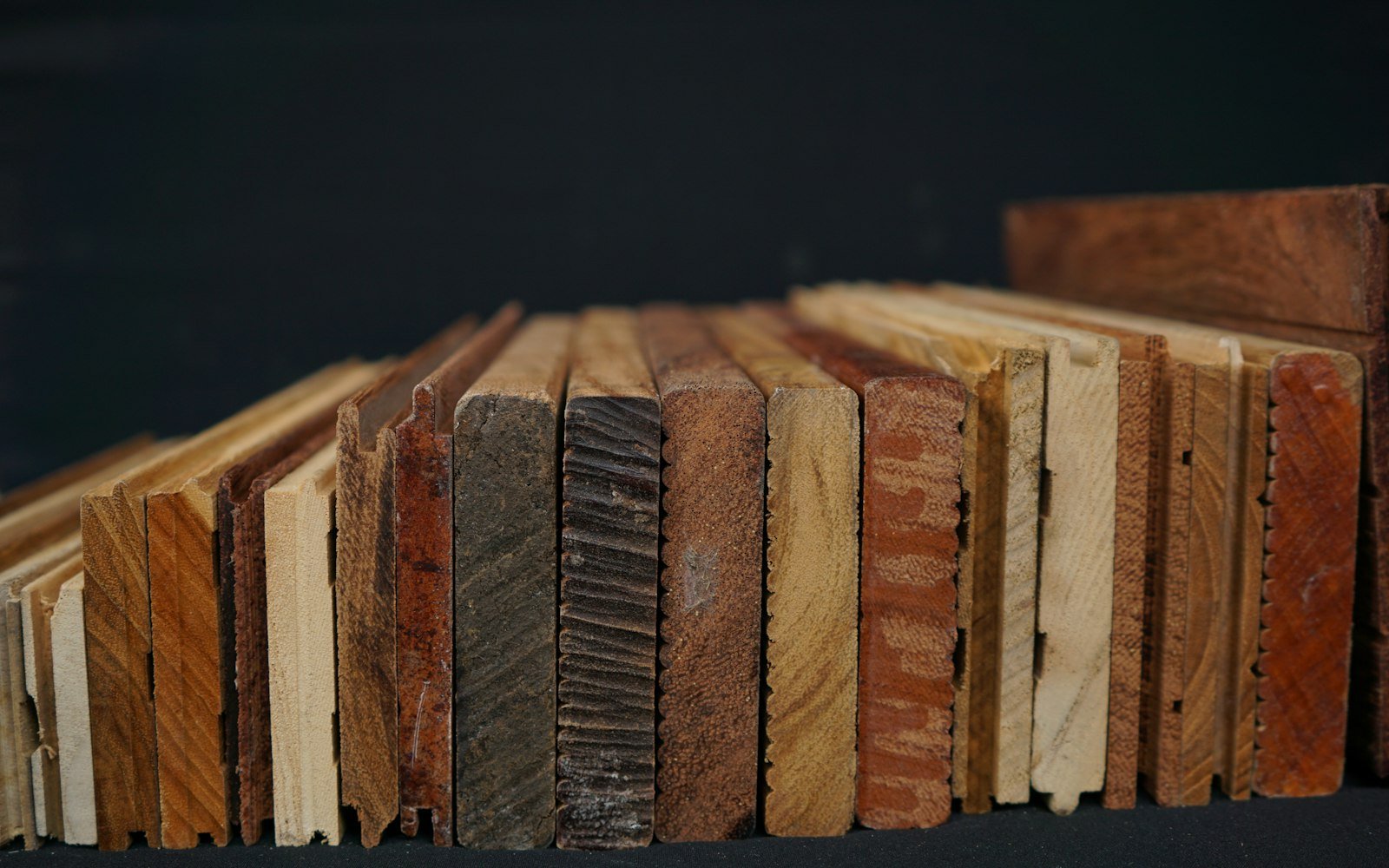
In India, plywood is graded by how well its glue bond survives water and is certified by the Bureau of Indian Standards (BIS). The general-purpose standard, IS 303:2024, now classifies plywood into MR, BWR and BWP grades, with appearance types AA, AB and BB and formaldehyde classes E1 and E2. Marine plywood has its own standard, IS 710, and fire-retardant plywood is covered by IS 5509.
1. MR grade (Moisture Resistant), IS 303
MR ply, often called commercial ply, resists humidity but not direct water. It is the most affordable branded option and is perfectly fine for wardrobes, beds, study tables and TV units in dry bedrooms and living rooms. It should never go under a sink or into a bathroom.
2. BWR grade (Boiling Water Resistant), IS 303
BWR ply uses a stronger, water-resistant resin and copes with occasional splashes and monsoon humidity better than MR. I like it for wardrobes on external walls, kitchen wall units, crockery units and anything near a window that might take rain.
3. BWP grade (Boiling Water Proof) and marine ply, IS 710
BWP and marine ply use phenol formaldehyde resin, designed to hold the layers together even after prolonged water exposure. This is what I specify for kitchen base units, the sink cabinet, bathroom vanities and utility or balcony storage. Many brands sell their BWP range under a “710” name, such as CenturyPly Sainik 710 and Greenply 710 Marine.
4. Fire-retardant plywood, IS 5509
Fire-retardant ply is chemically treated to slow the spread of flames. It is common in offices and hotels and worth considering around the hob or in homes where fire safety is a priority. Some premium ranges combine BWP bonding with fire-retardant treatment.
5. Flexible plywood
Flexible ply bends without cracking and is used for curved wardrobes, rounded bar counters and arched pooja units. It is a speciality board, so use it only where the design needs a curve.
Engineered boards you will also be offered
- Blockboard (IS 1659): a core of softwood strips sandwiched between veneers. Light and stiff over long spans, so it suits long shelves, beds and tall wardrobe doors, but it holds screws poorly at the edges and dislikes water.
- MDF (medium-density fibreboard): wood fibres pressed with resin into a smooth, dense sheet. Excellent for painted or PU-finished shutters and CNC-routed designs, but it swells badly when wet and is heavy.
- HDHMR (high-density high-moisture-resistant board): a denser, more moisture-tolerant fibreboard. A good option for kitchen and wardrobe shutters because it stays flat and resists warping.
- Particle board: wood chips bonded with resin. The cheapest option and common in flat-pack furniture. I do not recommend it for kitchens or anything that carries load.
Difference between MR, BWR and BWP plywood
This is the comparison I walk every client through, because it decides most of the plywood budget.
| Factor | MR (IS 303) | BWR (IS 303) | BWP / Marine (IS 710) |
|---|---|---|---|
| Glue type (typical) | Urea formaldehyde | Melamine-fortified resin | Phenol formaldehyde |
| Water performance | Resists humidity only | Resists occasional splashes and damp | Built for prolonged water exposure |
| Best rooms | Dry bedrooms, living room, study | Wardrobes on external walls, kitchen wall units | Kitchen base and sink units, vanities, utility |
| Typical colour of glue line | Light | Light to medium | Dark brown (phenolic) |
| Relative cost | Lowest | Medium | Highest |
| My verdict | Fine for dry furniture | Good all-rounder | Non-negotiable near water |
One caution: the colour of a board is not proof of its grade. Some local manufacturers dye cheap MR ply to look like BWP. The only reliable checks are the printed IS number, the manufacturer’s batch details and buying through an authorised dealer.
Quality differences between good and bad plywood
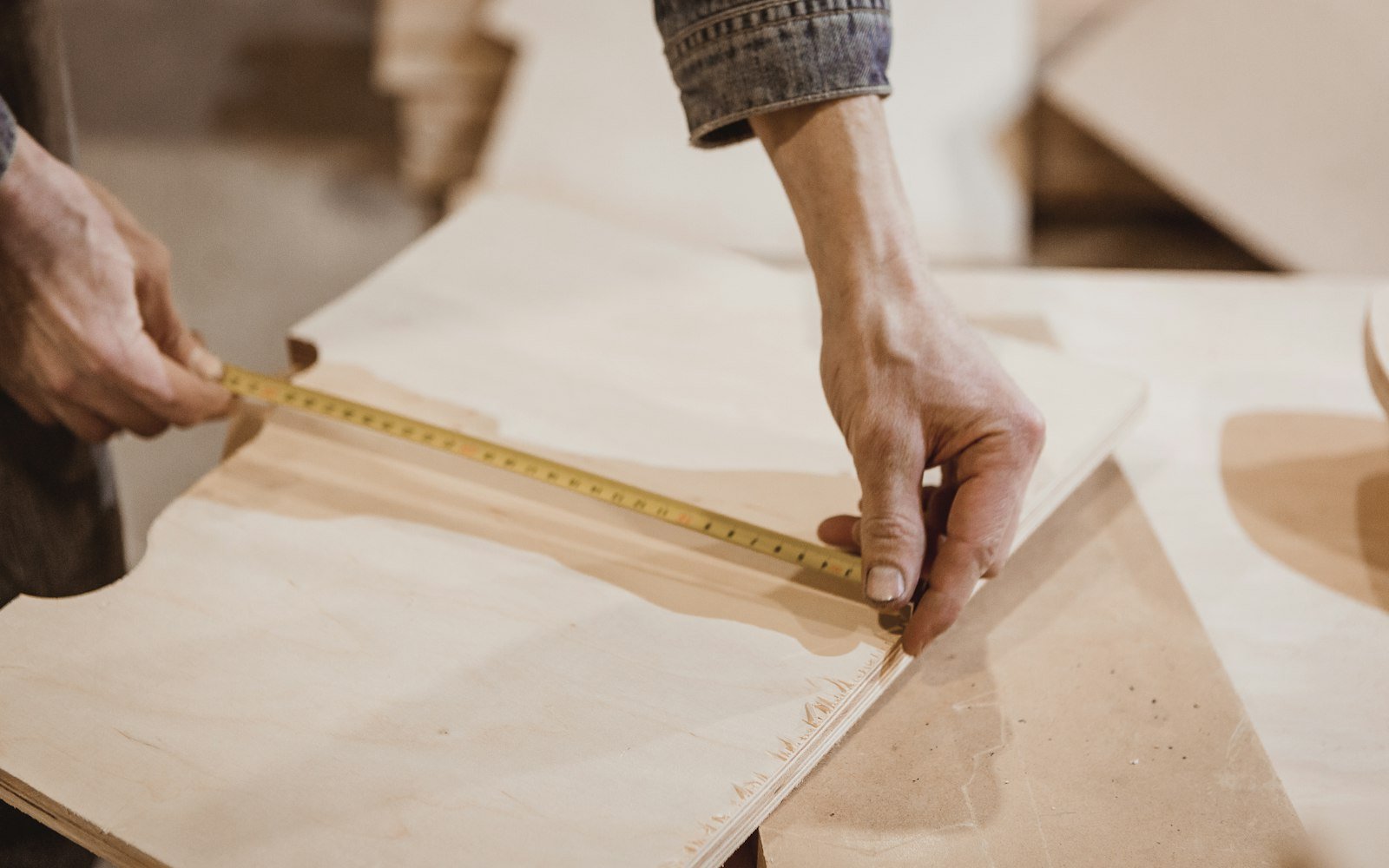
Two sheets with the same grade and thickness can perform very differently. These are the quality differences I look for, and the simple checks you can do yourself when the ply is delivered to your flat:
| Quality factor | Good plywood | Poor plywood | How to check |
|---|---|---|---|
| Core | Tight, gap-free hardwood or gurjan layers | Voids, overlaps and filler in the core | Look at a cut edge; you should see clean, continuous lines |
| Calibration | Uniform thickness across the sheet | Thick in some spots, thin in others | Measure at four corners with a vernier or tape |
| Thickness | Close to the stated size (for example, 18 to 19 mm) | “19 mm” that measures 16 or 17 mm | Measure the edge; anything well under the stated size is a red flag |
| Weight and density | Feels heavy and solid for its size | Light and hollow-sounding | Lift a sheet; knock on it and listen for dull or hollow spots |
| Surface | Smooth face veneer with few patches | Cracks, wavy surface, many patches | Run your palm over the face and look along it at an angle |
| Treatment | Borer and termite treatment stated | No mention of treatment | Check the brand literature and the sheet stamp |
| Emissions | E1 class or low-formaldehyde certification | No emission class printed | Check the stamp for E1 or E2 |
| Warranty | Written manufacturer warranty | Verbal promises only | Ask for the warranty card or invoice from an authorised dealer |
Every genuine BIS-certified sheet should carry the ISI mark, the IS standard number (303 or 710), the grade, the manufacturer’s licence number and a batch or date code. If a sheet carries only a sticker with a brand name, treat it with suspicion.
Plywood vs MDF vs HDHMR vs particle board vs blockboard
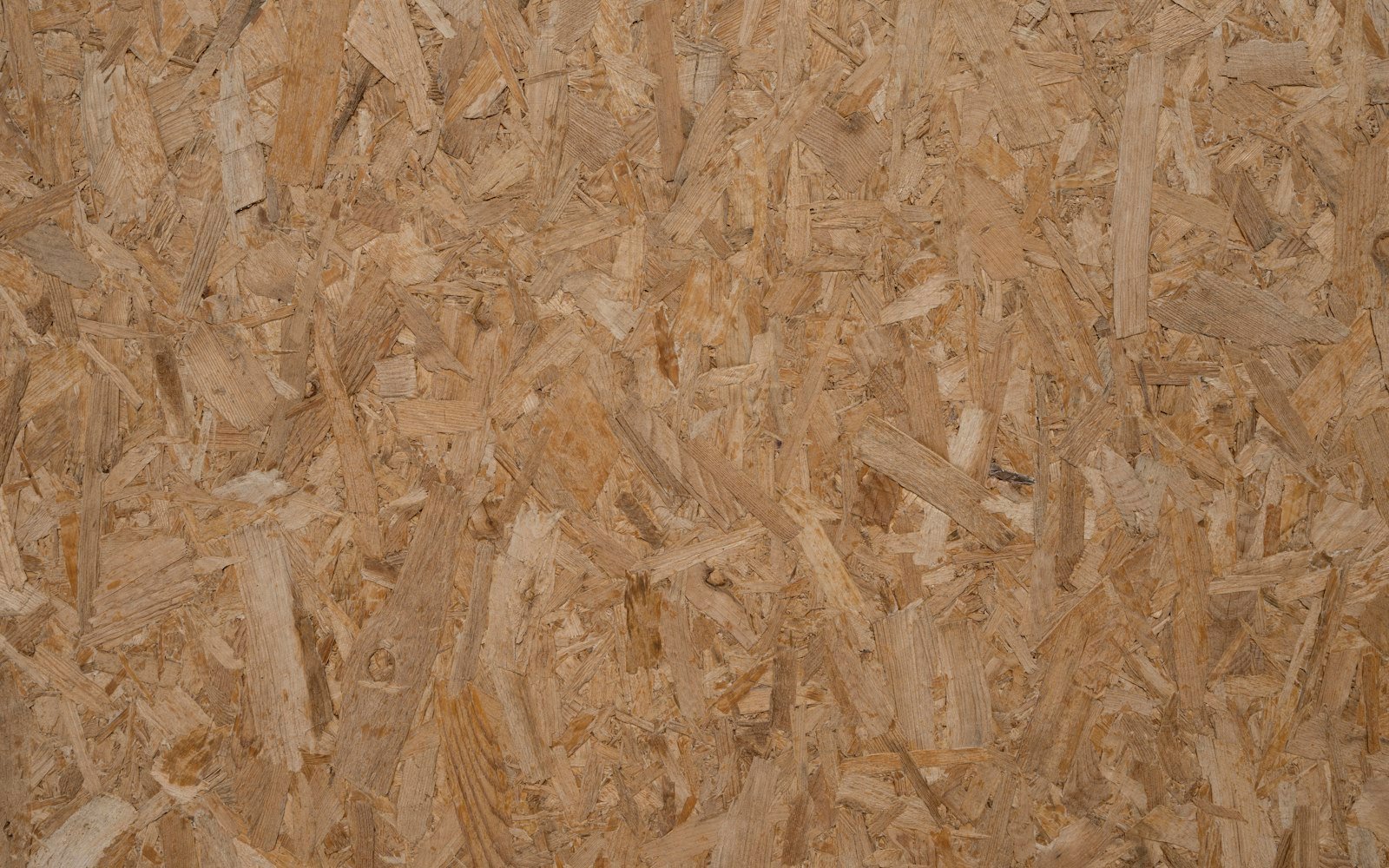
| Board | Strength and screw holding | Water resistance | Best use at home | Avoid for |
|---|---|---|---|---|
| Plywood (BWP) | Excellent | Excellent | Kitchen carcasses, vanities, sink units | Nothing; just costs more |
| Plywood (MR/BWR) | Very good | Moderate | Wardrobes, beds, TV units, study | Under sinks, bathrooms |
| Blockboard | Good along strips, weak at edges | Low to moderate | Long shelves, beds, large doors | Kitchens and wet areas |
| HDHMR | Good, dense | Good for a fibreboard | Shutters for kitchens and wardrobes | Load-bearing carcasses near water |
| MDF | Moderate, crumbles at edges if overloaded | Poor | Painted and PU shutters, CNC panels | Kitchens, bathrooms, heavy shelves |
| Particle board | Low | Very poor | Low-cost, light furniture | Anything that carries load or sees moisture |
My rule of thumb: carcasses (the boxes) in ply, choose shutters based on finish. For acrylic or laminate shutters, BWP ply or HDHMR both work well. For painted or PU shutters, HDHMR or MDF gives a smoother finish, but keep MDF away from the sink.
Best plywood brands in India
Most of the plywood used in Bangalore homes comes from a handful of national brands, each with ranges across MR, BWR and BWP grades. These are the names you will see in quotes, with the ranges I come across most often:
| Brand | Popular ranges | Known for |
|---|---|---|
| CenturyPly | Sainik MR, Sainik 710 (BWP), Club Prime, Architect Ply | Wide dealer network; Sainik 710 is sold at a single national price |
| Greenply | Ecotec, Gold, Club 500, Club 700, Platinum, 710 Marine | Strong BWP and premium ranges with long warranties |
| Kitply | Kitply MR, Kitply Gold (BWR), Kitply Marine, Curvy (flexible) | Long-standing brand with a flexible-ply option |
| Archidply | Club, Gold, Marine ranges | Mid-premium pricing popular with carpenters in South India |
| Austin Plywood | Club Plus and BWP ranges | Value-focused branded option |
| Duroply | Duro Plus, BWP and marine ranges | Established brand with marine-grade options |
| Sharon Ply | BWP and marine ranges | Premium boards often used in high-end projects |
Two practical points. First, every major brand sells several tiers, and the cheapest tier of a premium brand can be weaker than the top tier of a mid-range brand, so compare the exact product name, not just the logo. Second, the plywood market has counterfeits. Buy from authorised dealers, ask for a tax invoice with the product name and grade, and check the stamp on each sheet.
Brand and range names are taken from manufacturer and retailer listings in 2026. HomeinBudget is not paid by any plywood brand.
Plywood price in India for 2027
Plywood is priced per square foot, and a standard 8 x 4 ft sheet is 32 sq ft, so multiply the per-sq-ft rate by 32 to get the sheet price. Price depends on grade, thickness, core species, brand tier and the dealer. The figures below are the latest published rates (late 2026), which is the best basis for planning a 2027 project; treat them as a guide and always get a dated quote.
| Product or grade | Published price | Source |
|---|---|---|
| CenturyPly Sainik 710 (BWP) | About ₹107 to ₹109 per sq ft including GST, single price across India | CenturyPly |
| Century Club Prime BWP, 19 mm, 8 x 4 ft | ₹5,124 per sheet (about ₹160 per sq ft) in Bangalore | HomeRun price list |
| Greenply MR 303 (4 to 25 mm) | ₹45 to ₹175 per sq ft | Greenply |
| Greenply Club 500 BWR (4 to 25 mm) | ₹70 to ₹265 per sq ft | Greenply |
| Greenply 710 Marine BWP (4 to 25 mm) | ₹55 to ₹195 per sq ft | Greenply |
| 18 mm marine ply, 8 x 4 ft sheet | ₹3,800 to ₹6,800 per sheet, more for premium brands | Greenply |
For budgeting, this is roughly what I see for 18 to 19 mm branded boards in Bangalore when we buy for client projects. These are approximate street ranges, not list prices:
| Grade (18 to 19 mm, branded) | Approx. per sq ft | Approx. per 8 x 4 sheet |
|---|---|---|
| MR (IS 303) | ₹75 to ₹110 | ₹2,400 to ₹3,500 |
| BWR (IS 303) | ₹90 to ₹140 | ₹2,900 to ₹4,500 |
| BWP / Marine (IS 710) | ₹105 to ₹165 | ₹3,400 to ₹5,300 |
| Premium BWP or fire-retardant | ₹150 and above | ₹4,800 and above |
Plywood is only part of what you pay for in a kitchen or wardrobe. Laminates, edge banding, hardware, labour and installation usually add more than the board itself. My interior design cost guide for Bangalore and 3 BHK cost guide show how plywood fits into the total budget.
Which plywood to use where in your home
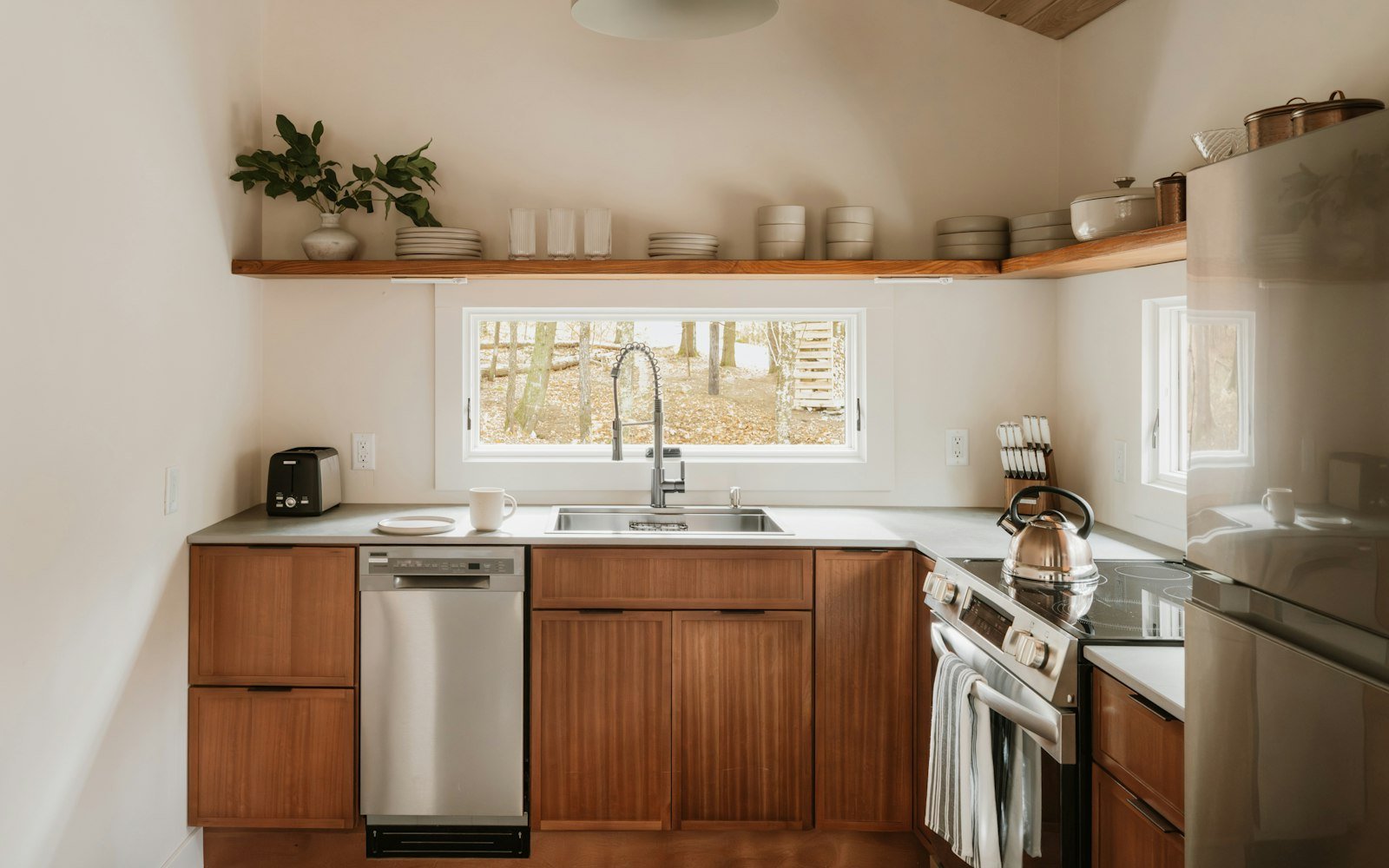
| Area | Recommended board | Thickness | Why |
|---|---|---|---|
| Kitchen base units | BWP / Marine (IS 710) | 18 to 19 mm | Spills, mopping and leaks from the sink and RO |
| Sink cabinet | BWP / Marine (IS 710) | 18 to 19 mm | The wettest cabinet in the house |
| Kitchen wall units and loft | BWR or BWP | 18 to 19 mm | Steam and humidity from cooking |
| Kitchen and wardrobe shutters | BWP ply or HDHMR | 18 to 19 mm | Must stay flat to close neatly |
| Bathroom vanity | BWP / Marine (IS 710) | 18 to 19 mm | Constant splashes and humidity |
| Wardrobes (internal walls) | MR or BWR (IS 303) | 18 to 19 mm carcass, 6 to 9 mm back | Dry area; BWR if budget allows |
| Wardrobes (external walls) | BWR (IS 303) | 18 to 19 mm | Walls can get damp during the monsoon |
| Beds and storage beds | BWR ply or blockboard | 18 to 19 mm | Long spans need stiffness |
| TV unit and study | MR or BWR | 18 mm, 12 mm for light shelves | Dry, low-load areas |
| Utility and balcony storage | BWP / Marine (IS 710) | 18 to 19 mm | Washing machine, rain and humidity |
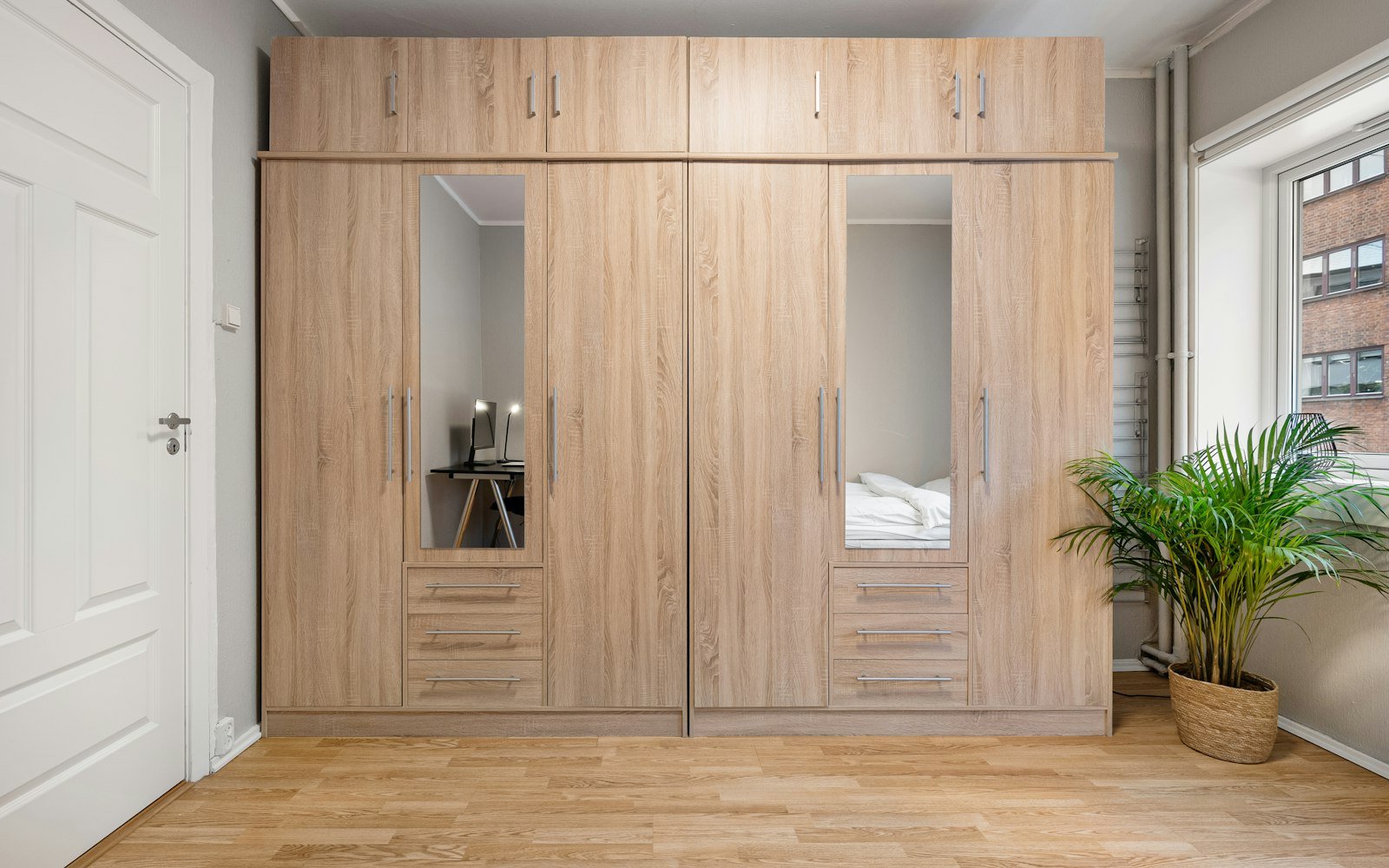
This mix lets you spend where it matters. Upgrading the kitchen and bathrooms to BWP while using MR or BWR in bedrooms usually costs far less than doing the whole house in marine ply, with no real loss in durability. You can see how we apply it in our white L-shaped kitchen, island kitchen, sliding wardrobe and walk-in wardrobe designs.
How plywood is cut and laminated
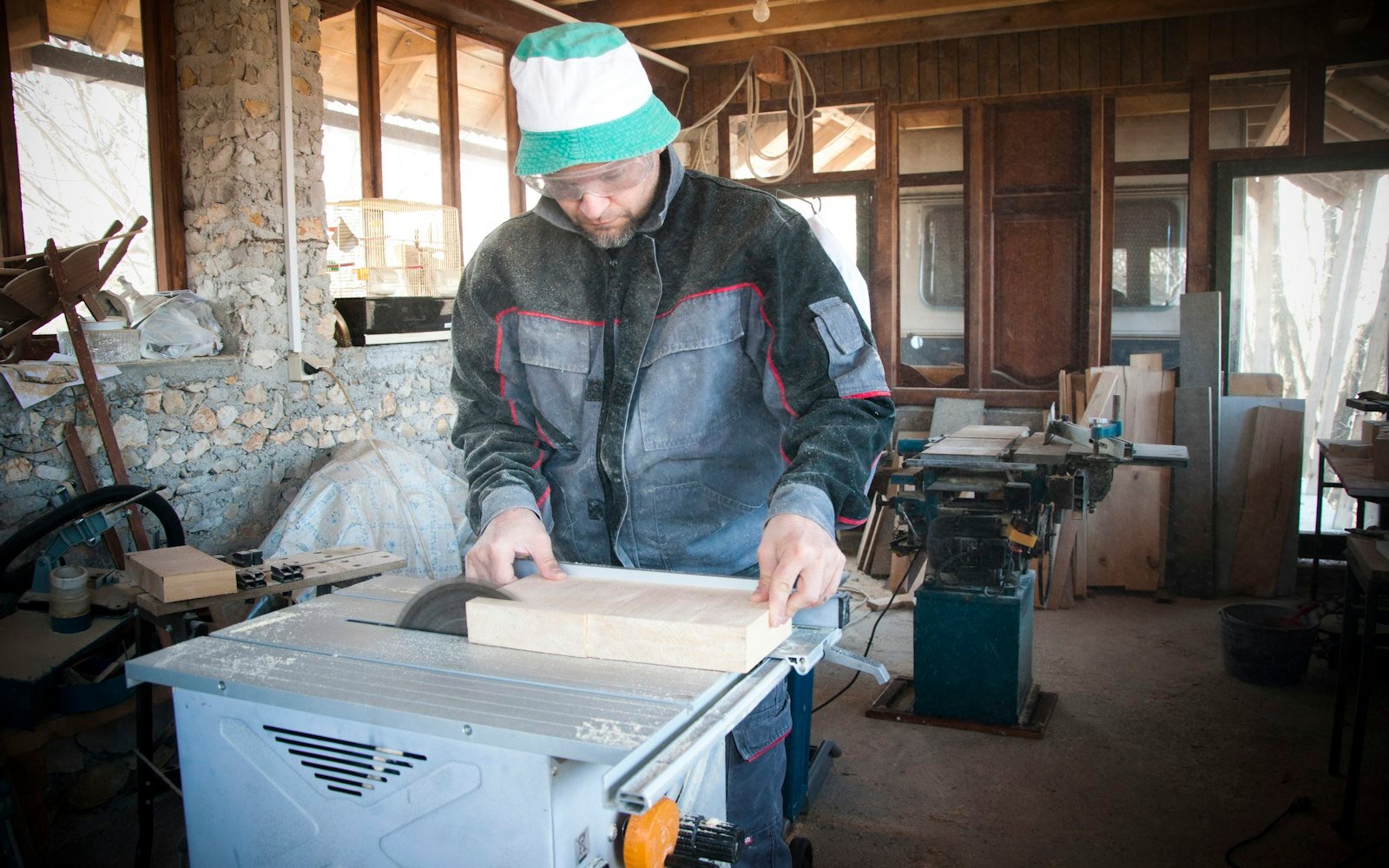
Even the best ply can be ruined by poor workmanship. This is the process our carpenters follow, and what you should expect from any company building your interiors:
- Design and cutting list. Once the 3D design is approved, every cabinet is broken down into panels with exact sizes, and the panels are planned on each 8 x 4 sheet to reduce waste. Good planning also keeps the grain direction consistent on visible panels.
- Sheet inspection. Each sheet is checked for grade stamp, thickness, warping and core defects before a single cut is made. Rejected sheets go back to the dealer.
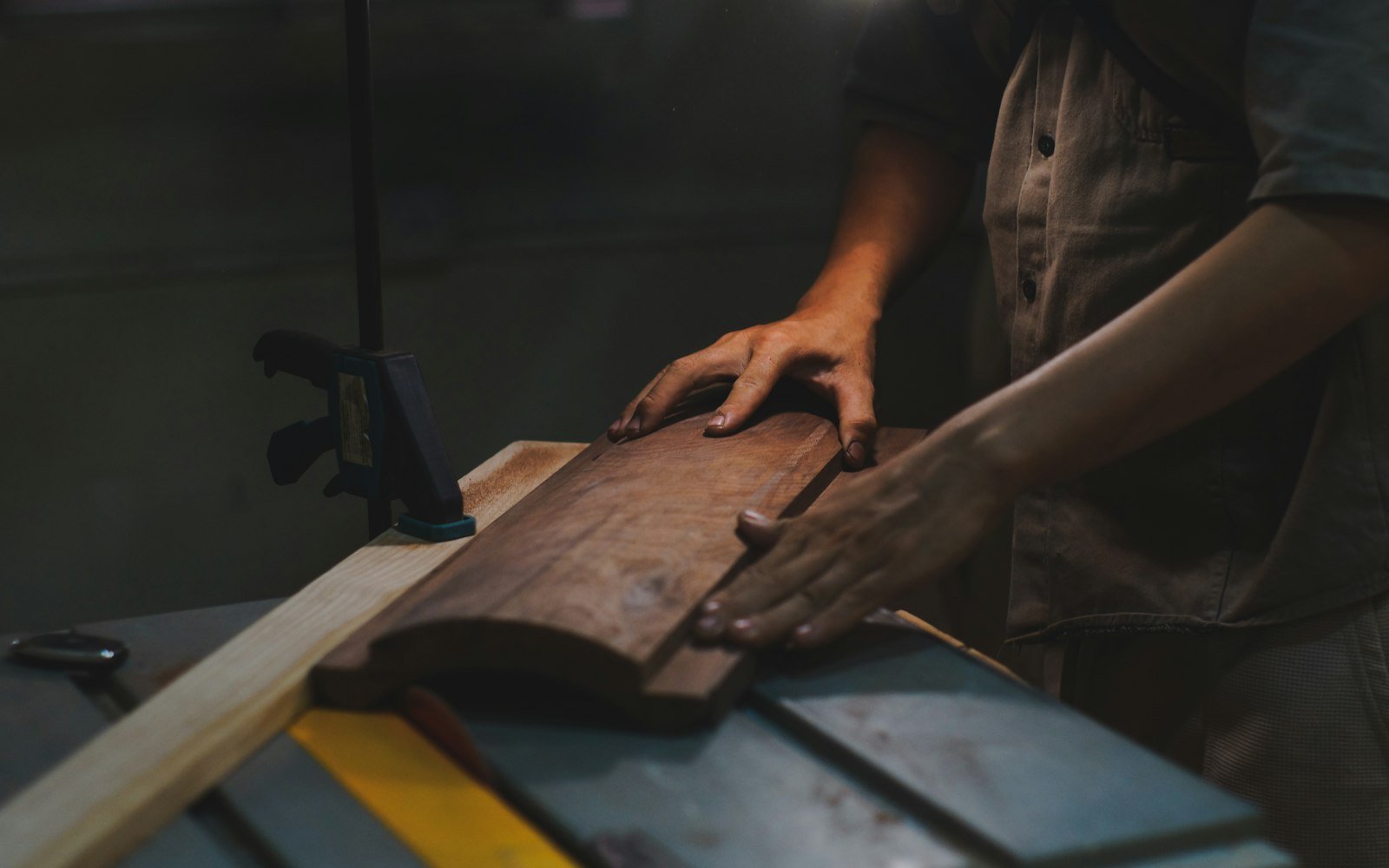
- Cutting. Panels are cut on a panel saw or a sliding table saw with a sharp carbide blade, often with a scoring blade to prevent chipping. In factory setups, a computer-controlled beam saw or CNC router does this with millimetre accuracy.
- Laminate selection. The outer, visible faces get a decorative laminate, usually around 1 mm thick. The inside faces get a thinner balancing or liner laminate, typically about 0.8 mm. Laminating both sides matters: a board laminated on one side only can bow over time.
- Pasting the laminate. The ply surface is cleaned and lightly sanded, and a synthetic resin adhesive is spread evenly with a notched trowel on both the board and the laminate back. The two are pressed together, either in a cold press or with weights and clamps for several hours on site, or in a hot press in a factory, which cures faster and gives a more even bond.
- Trimming. Once the adhesive has cured, the excess laminate is trimmed flush with a router and a bevel bit, so the edge is clean and the laminate is not lifting.
- Edge banding. Every exposed edge is sealed with PVC or ABS edge band tape, commonly 0.8 mm for internal edges and 2 mm for shutters and visible edges. Factory edge-banding machines use hot-melt glue; on site, carpenters use contact adhesive and a hand trimmer. Edge banding is what keeps moisture out of the core, so it should never be skipped.
- Drilling and assembly. Hinge cups, drawer channels and minifix connectors are drilled at precise positions, and the carcasses are assembled, squared and fixed to the wall.
- Finishing and snagging. Shutters are aligned, hinges adjusted, handles fitted and every edge checked for gaps or lifting laminate before handover.
| Factor | Site-made (carpenter on site) | Factory-made (modular) |
|---|---|---|
| Cutting accuracy | Depends on the carpenter and tools | Very high with beam saw or CNC |
| Laminate bonding | Cold press or clamps on site | Hot press, more uniform |
| Edge banding | Manual, contact adhesive | Machine, hot-melt glue |
| Flexibility | Easy to adjust to odd walls on the spot | Needs exact measurements up front |
| Dust and time at home | More dust and time in your flat | Less on-site work, faster installation |
Both approaches can produce excellent results. What matters is a skilled, supervised team, the right adhesive, balancing laminate on both faces and properly sealed edges.
Common plywood tricks to watch out for
- Grade swapping: quoting BWP but delivering MR, especially for hidden carcasses. Ask to see the stamp on the sheets delivered to your home.
- Short thickness: “19 mm” boards that measure well under that. Measure a few sheets.
- Dyed boards: cheap ply coloured dark to look like phenolic BWP. Trust the IS stamp and invoice, not the colour.
- Brand without range: a quote that says only “Century” or “Greenply” without the product name. The difference between tiers can be large.
- No balancing laminate: laminate on one face only, which can lead to warping.
- Missing edge banding: raw ply edges inside cabinets that soak up moisture.
- Unbranded backs and shelves: branded ply for the visible parts and cheap board for backs, shelves and drawers.
Why HomeinBudget is the right partner to choose your plywood
Choosing ply should not feel like a gamble. This is how we make sure you get the board you paid for:
- Every quote names the ply. Our itemised quote lists the brand, the exact range, the grade, the IS standard and the thickness for every part of every cabinet, not just “branded ply”.
- The right grade in the right place. We use BWP (IS 710) for kitchen base units, sink cabinets, vanities and utility storage, and BWR or MR in dry rooms where it makes sense, so your budget goes where it protects you most.
- ISO-certified materials and trusted hardware. We pair certified plywood with Hettich, Häfele and Ebco hardware.
- You can inspect the sheets. When ply arrives at your flat, you are welcome to check the stamps and measure the thickness. We will show you how.
- Our own carpenters. Cutting, laminating and edge banding are done by our in-house team, with balancing laminate on both faces and sealed edges as standard.
- A 10-year warranty on woodwork and workmanship, and a free site visit and estimate before you commit.
- Handover in about 45 days for typical projects, with stage payments tied to progress.
If you are planning a kitchen, my guide to kitchen colour combinations pairs well with this one, and for ceilings see my false ceiling design ideas. You can also read more about us or see what homeowners say about Bangalore interior companies in my Reddit roundup. We work across the city, including Whitefield, Sarjapur Road, HSR Layout, Electronic City and Hebbal.
My final verdict
So, which plywood is best for home interiors? For the parts of your home that meet water, choose BWP or marine plywood certified to IS 710, in 18 to 19 mm. For dry rooms, a good MR or BWR plywood certified to IS 303 is perfectly adequate and saves money. Use HDHMR or MDF only where a smooth painted finish matters and water does not. Pick a reputable brand, but judge the exact range, the IS stamp, the thickness and the core rather than the logo.
Most importantly, insist on a quote that names your plywood precisely and a team that cuts, laminates and edge-bands it properly. If you would like us to specify the right ply for your home, book a free site visit and estimate from our homepage.
Frequently asked questions
Which plywood is best for home interiors in India?
For kitchens, sink units, bathroom vanities and utility areas, BWP or marine plywood certified to IS 710 is best. For wardrobes, beds and TV units in dry rooms, good MR or BWR plywood certified to IS 303 is enough. Use 18 to 19 mm for carcasses and shutters.
Which plywood is best for a modular kitchen?
BWP or marine plywood (IS 710) in 18 to 19 mm for base units and the sink cabinet, with BWR or BWP for wall units. Shutters can be BWP ply or HDHMR. Avoid MR ply, MDF and particle board for kitchen carcasses.
Is BWP and marine plywood the same?
In practice, most brands sell their BWP-grade boards as marine plywood under IS 710, and both use waterproof phenol formaldehyde resin. Check that the sheet carries the IS 710 mark rather than relying on the name.
What is the price of plywood per sq ft in 2027?
Based on the latest published rates from late 2026, branded 18 to 19 mm plywood in Bangalore typically costs about ₹75 to ₹110 per sq ft for MR, ₹90 to ₹140 for BWR and ₹105 to ₹165 for BWP, with premium ranges costing more. CenturyPly Sainik 710 is sold at about ₹107 to ₹109 per sq ft including GST. A standard 8 x 4 sheet is 32 sq ft.
Which is the best plywood brand in India?
CenturyPly, Greenply, Kitply, Archidply, Duroply, Austin and Sharon are all established brands. Each sells several tiers, so compare the exact range, grade, IS certification and warranty rather than the brand name alone.
Is HDHMR better than plywood?
HDHMR is denser and stays flatter, so it is good for shutters, especially painted or PU finishes. Plywood holds screws better and is stronger for carcasses. Many good kitchens use BWP ply for the boxes and HDHMR for the shutters.
How can I check if plywood is genuine?
Look for the ISI mark, the IS number (303 or 710), the grade, the manufacturer’s licence number and a batch code on each sheet. Buy from an authorised dealer, ask for an invoice naming the product, measure the thickness and check the cut edge for core gaps.